Whole-home air duct promotion$199.00 with code VENTS199 See the terms

Step 04 of 07 · Upholstery

Upholstery and furniture.

Priced by the piece. The cleaning method is chosen from the fabric in front of us, and if a fabric or its condition puts the piece at risk we say so before we start rather than after.

  1. 01 Start
  2. 02 Carpet
  3. 03 Air ducts
  4. 04 Upholstery
  5. 05 Move cleaning
  6. 06 Add-ons
  7. 07 Review

Pieces

What would you like cleaned?

Leave everything at zero and continue if you do not want upholstery cleaning on this visit.

A sectional is anything beyond a standard three-seat frame — chaise ends, corner units and modular runs. If you are not sure which category a piece falls into, put it down as the closer one and add a photo on the review step; we confirm the figure before work begins.

Antique, designer or heirloom pieces are quoted individually rather than from this list. See designer and antique furniture cleaning.

← Back to air ducts

The method

How we decide how to clean your fabric.
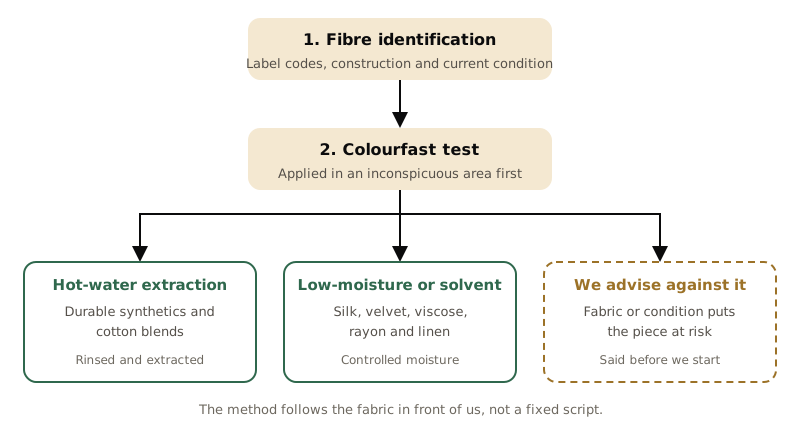
Decision diagram for upholstery cleaning. Every piece starts with fiber identification and a colorfast test in a hidden area, then goes to hot-water extraction for durable synthetics and cotton blends, a low-moisture or solvent method for silk, velvet, viscose, rayon and linen, or a recommendation against cleaning when the fabric or its condition puts the piece at risk.
Fiber identification and a colorfast test come first, every time.

Cross-section

Woven fabric, in section.
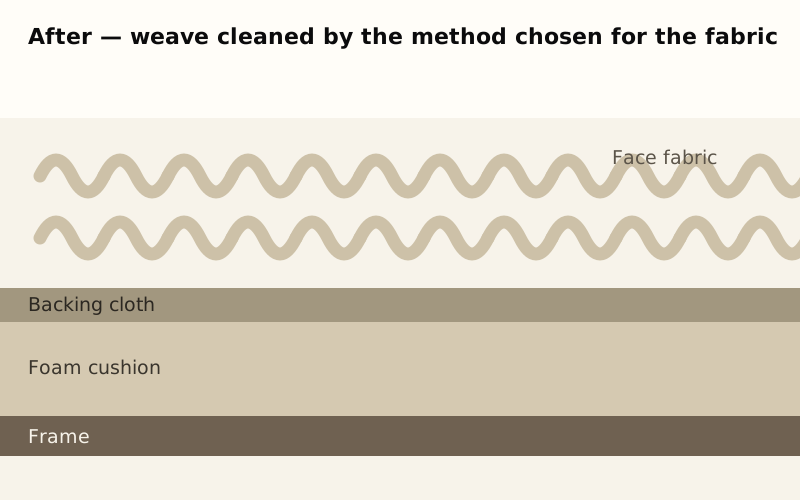
Illustrated cross-section of upholstery fabric after cleaning: the weave open and soil lifted out of the pile and backing cloth.
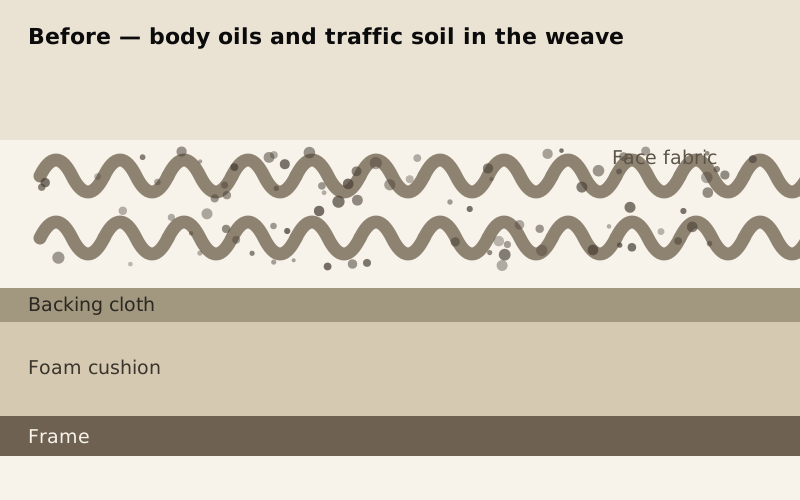
Illustrated cross-section of soiled upholstery fabric: body soil and grit held between the fibers of the weave and in the backing cloth.
Drag or use the arrow keys. Labeled illustrations of fabric construction, not photographs of a particular piece.
  • We read the manufacturer's label code where one survives, and identify the fiber by hand and by construction where it does not.
  • Colorfast testing happens in an inconspicuous area before any product reaches a visible panel.
  • Dye migration, pile crush on velvet, shrinkage on loose covers and existing wear are risks that belong to the fabric, not to the method. Where we see one, you hear about it before we begin.

We stand behind the quality of our workmanship and will address concerns related to the agreed scope of service.